The Case Against Buying Followers From Famoid
.jpg)
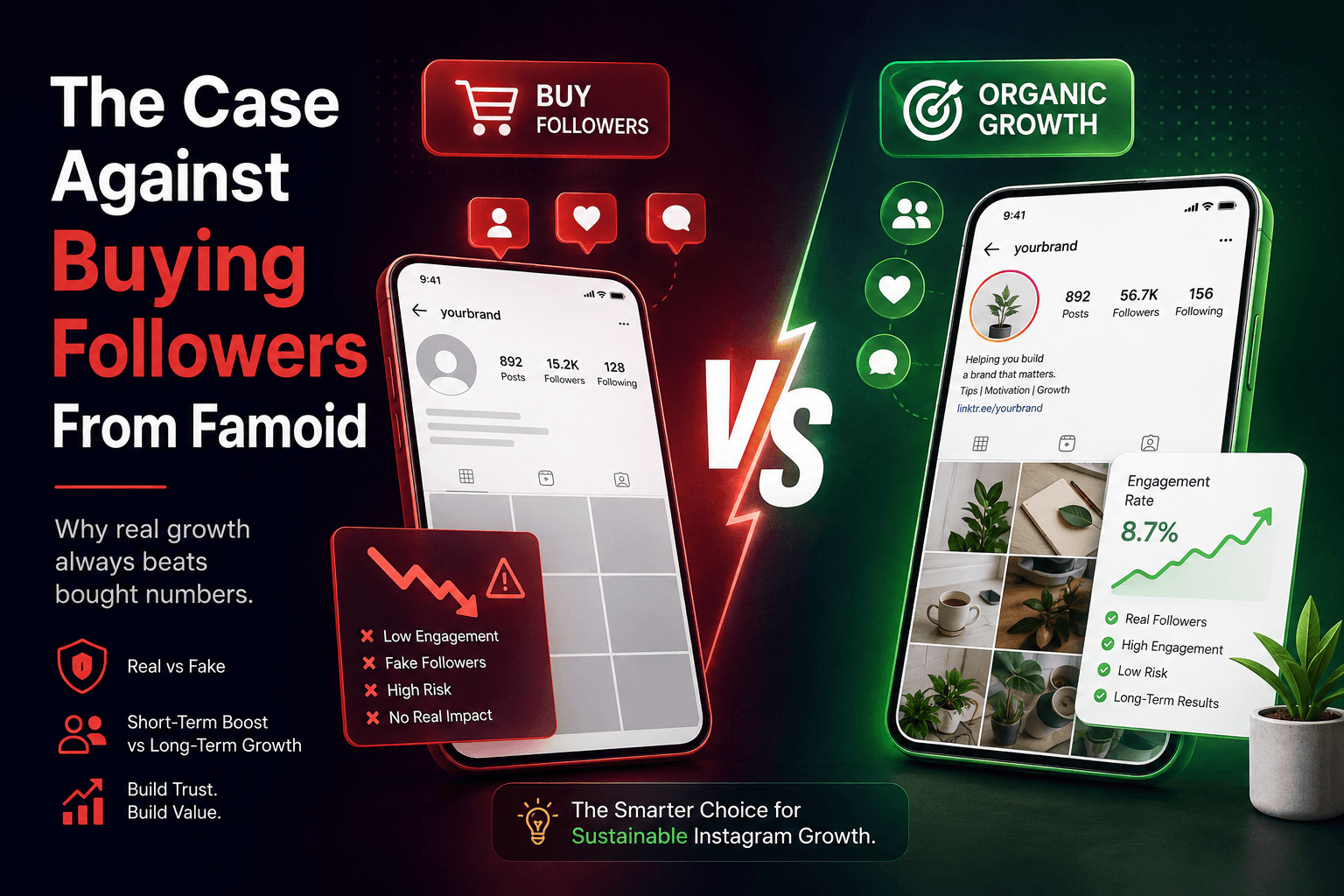
If you've been circling the idea of buying Instagram followers, you've probably landed on Famoid's pricing page at some point — the numbers are hard to ignore. $3.95 for 250 followers. A few dollars for likes. No subscription, no commitment, delivery within the hour. It's a reasonable thing to be tempted by, especially if you're staring at a new account with zero social proof and a launch date that isn't moving.
But "cheap and fast" and "actually good for your account" aren't always the same question, and it's worth sitting with the difference before you spend anything. Famoid and Kicksta both show up in searches for Instagram growth, both have been around since 2017, and both will tell you they're the safer, smarter option. They're not solving the same problem, though — and which one is right for you depends entirely on what you're actually trying to build.
Two Ways of Thinking About the Word "Growth"
Famoid's model is transactional. You pick a quantity, you pay, and that quantity shows up on your account — followers, likes, views, comments, spread across Instagram, TikTok, and Facebook. It's called an "ad-based delivery" system, and the pitch is that it routes engagement through advertising mechanisms rather than bot farms or fake-account databases, which in theory makes the activity look more natural. Famoid also lets you choose gradual delivery instead of an instant dump, spacing things out so the growth curve doesn't look like a cliff.
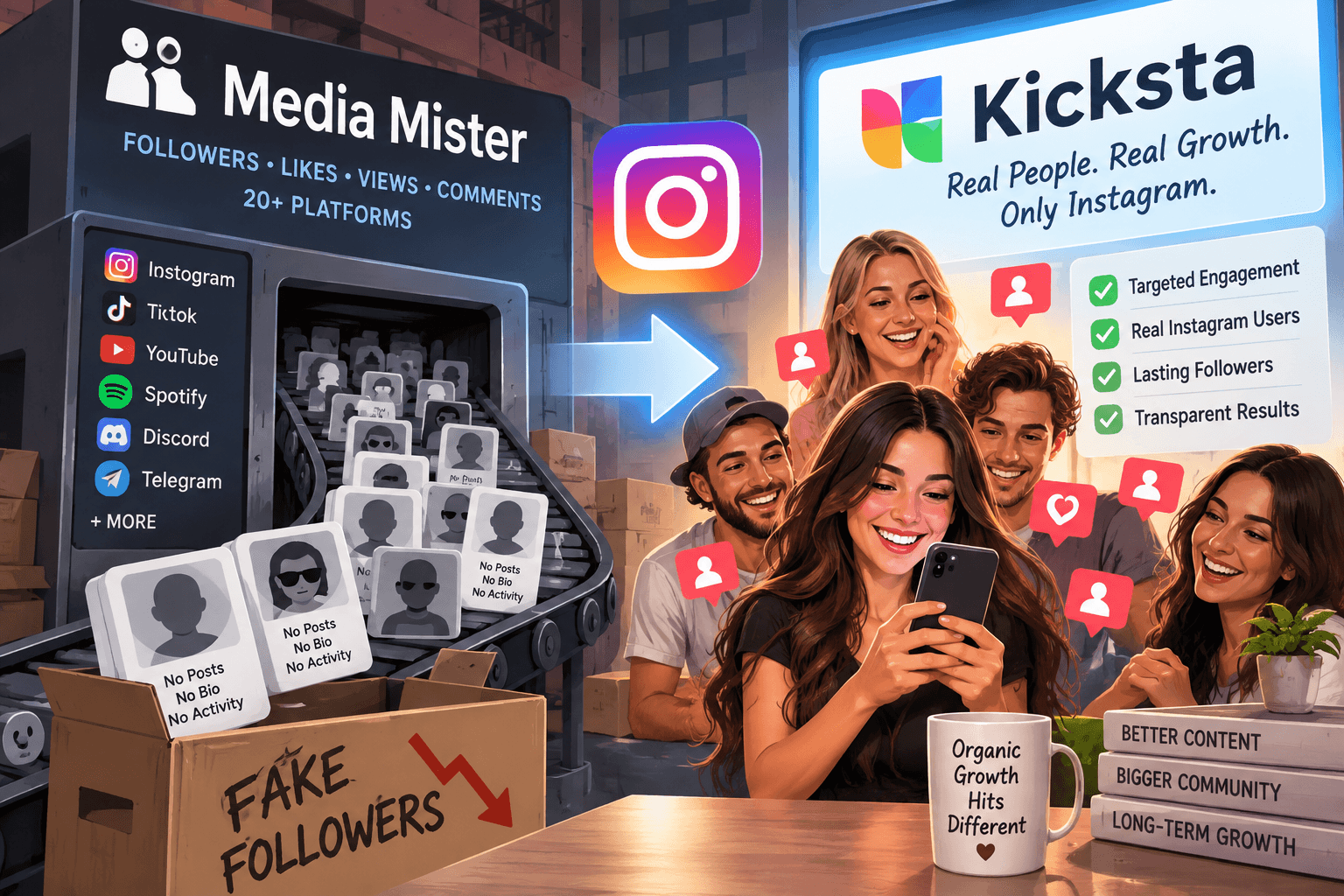
Kicksta works from a completely different starting assumption: that a follower is worth something specifically because a real person decided, on their own, that your account was worth following. Nothing is delivered to you. Instead, Kicksta runs targeted engagement — following, story-viewing, liking — on your behalf, aimed at real Instagram users who match your niche, and lets them choose to follow back. The number goes up slower. It also means something different when it does.
That distinction sounds almost philosophical until you look at what it does to your account, in practice, six months in, which is where most of this comparison lives.
What Happens When You Order From Famoid
Famoid's process is almost aggressively simple: pick a service, choose a quantity, enter your username, pay. Delivery typically starts within 30 minutes, with larger orders taking up to a day. No account login required, no monthly commitment, and a 30-day refill guarantee if anything drops off. Famoid backs it with 24/7 support and accepts all major payment methods, and the multi-platform coverage — Instagram, TikTok, and Facebook, all from one dashboard — is a genuinely convenient feature if you're managing more than one channel.
What you don't get is any say in who those followers or likes are. There's no targeting step, no niche filter, no way to specify that you want people interested in, say, sustainable fashion or B2B software. You're buying a number, and the number arrives.
Setting Up Kicksta, Step by Step
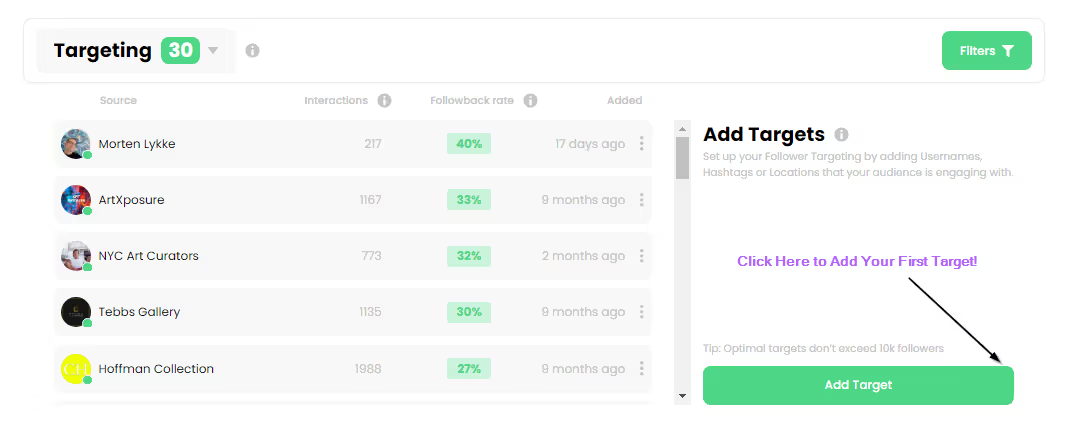
By comparison, Kicksta is entirely cloud-based — nothing to download, nothing running on your machine. You sign up, verify your Instagram account, and then build your targeting: competitor accounts whose followers look like your ideal audience, relevant influencers in your niche, hashtag communities your future followers already use. Advanced filters narrow it further by follower count, follow ratio, post frequency, and account privacy, and you can run up to 30 targets (10 on the Growth plan) at once. New users aren't starting from a blank page, either — Kicksta pulls from historical performance data across similar niches and suggests targets that have already worked for comparable accounts.
Everything from there runs on real physical devices with dedicated proxies assigned per account, choosable from 60+ countries and dozens of major U.S. cities, so the activity looks exactly like a real person logging in from a consistent location — not a script running from a data center. After a short warm-up period, the system scales to around 400 actions a day, roughly 12,000 a month, aiming for a follow-back rate of 10% or better.
The part that differentiates Kicksta from most of the category, though, happens after someone follows back. A new follower gets their stories viewed automatically before they've even decided whether to follow you — a quiet touchpoint that builds familiarity before the follow-back decision is made. Once they do follow, Kicksta engages their recent posts to reinforce the connection, and they're placed into your Close Friends list, which puts your content behind the green ring people already associate with priority content. A welcome DM goes out, but not immediately — it waits three to four days, and only fires for people who actually followed back, so it lands in the middle of an already-familiar relationship instead of arriving like a cold sales pitch the second someone's follow notification appears. From the follower's side, that sequence reads less like automation and more like an account that's been quietly present for a few days before it ever said anything — by the time the message shows up, they've already seen your stories two or three times and probably viewed a post or two, so it reads more like a normal "hey, thanks for following" than a script firing on a timer.
The Follower Quality Problem, in Plain Terms
This is the part worth slowing down for, because it's the one that keeps affecting your account after the sale is over.
When a follower arrives through Famoid's delivery system, they had no independent reason to find your content — the mechanism brought them to your profile, not their own interest in what you post. Famoid's own FAQ is fairly candid about this, noting that buying followers "works best when it supports real activity rather than replacing it" — which is an honest thing to say, but it's also an admission that the number itself doesn't do the work.
Instagram's algorithm doesn't just track how many followers you have; it tracks how many of them do anything at all — save a post, reply to a story, tap through to your profile. When a follower count grows faster than genuine engagement does, that gap is exactly what current regulatory attention has zeroed in on. The FTC's 2024 rule on manufactured social proof specifically targets bot-generated followers and views sold to misrepresent real influence — Famoid states plainly that its followers come from real accounts, not bots, so that specific rule isn't describing Famoid's mechanism. But the underlying concern it's built around — a follower count that doesn't reflect anyone's actual interest — is precisely the gap between a delivered number and one that was earned account by account.
It's also worth knowing what that gap looks like up close. A batch of delivered followers tends to share a few tells once you look at them individually — sparse posting history, generic bios, little to no engagement on their own content — and learning to spot fake Instagram accounts is a genuinely useful skill even outside this comparison, since it's the same pattern-recognition that separates a follower count that helps your account from one that quietly drags down your engagement rate.
A follower who found you through Kicksta's targeting went through several small moments of contact first: they follow accounts like yours already, they engage with your niche's hashtags, and in a lot of cases they'd already seen your account view their story once or twice before they ever tapped follow. That's not a guarantee they'll become superfans. But it's a fundamentally different starting point than a follower whose only connection to your account is that a delivery system decided to route them there.
{{blog-cta-section}}
Why Targeting Precision Matters More Than It Sounds Like It Should
Famoid doesn't offer any targeting for followers — you're choosing a quantity, not a demographic or interest group. There's no mechanism for saying "I want people who follow plant-based cooking accounts" or "I want people already engaging with independent game developers." The delivery is real, in the sense that Famoid says these are genuine accounts, but it's untargeted by design.
Kicksta's entire pitch rests on the opposite bet: that pointing engagement at people who are already primed to be interested produces a fundamentally better outcome than pointing it at nobody in particular. The system keeps refining which targets are converting best using real-time performance data, so the targeting gets sharper the longer you run it — something a one-time delivery order structurally can't do, because there's no ongoing account behavior to learn from.
Two Kinds of Safety Claims
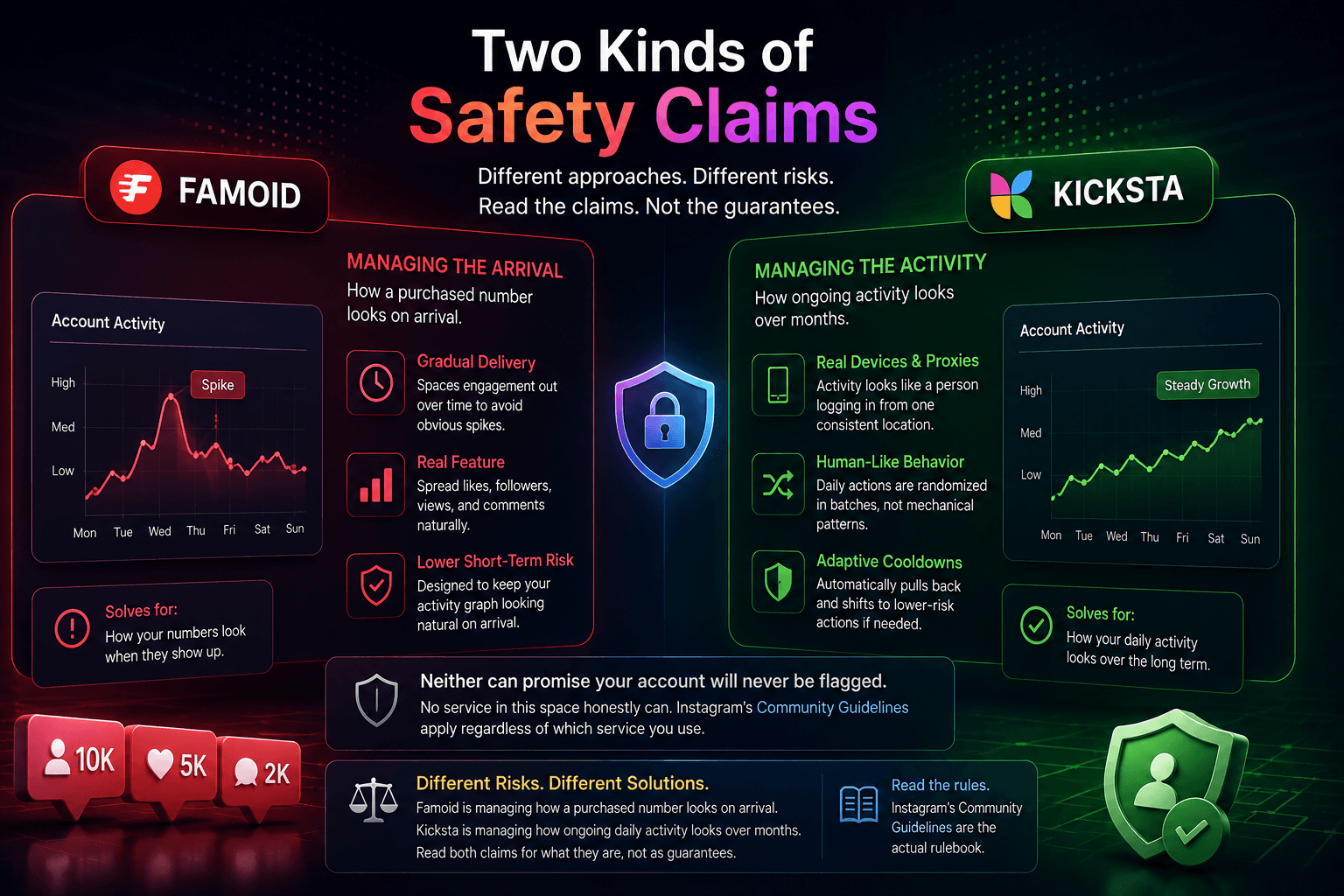
Both services will tell you their approach is safe, and it's worth being precise about what that means in each case, because this is the one place where overstating an advantage crosses from marketing into something closer to a false safety claim.
Famoid's gradual-delivery option is a real feature — spacing engagement out over time instead of delivering it all at once is a reasonable way to avoid an obvious spike in your account's activity graph. Kicksta's safety approach works differently: real devices and dedicated proxies mean the activity looks like a person logging in from one place, daily actions are distributed in randomized batches rather than mechanical patterns, and an adaptive cooldown system automatically pulls back on follow/unfollow activity and shifts to lower-risk actions like story-viewing whenever Instagram signals any concern.
Neither of these approaches can promise your account will never be flagged for anything — no service in this space honestly can, and any that claims otherwise is overstating what's within their control. Instagram's own community guidelines page is the actual rulebook here, and they apply regardless of which service you use. What's true is that Famoid and Kicksta are solving for different risks: Famoid is managing how a purchased number looks on arrival, and Kicksta is managing how ongoing daily activity looks over months. Read both claims for what they are, not as guarantees.
What the Numbers Actually Mean Once You Have Them
It's worth being honest about a limit that applies to both services, not just one: neither Famoid nor Kicksta can make a weak content strategy perform well. Famoid can hand you a follower count; Kicksta can hand you a niche-relevant audience willing to engage. Neither one can make someone save a post that isn't worth saving, or reply to a story that has nothing to say. The targeting and the engagement sequence get people to your profile and give them a real reason to look — what happens after that is still on you.
That caveat matters more for Kicksta's pitch than Famoid's, if anything, since Kicksta's entire case rests on the idea that the followers it brings you are worth having around. That's only true if there's something on your profile worth sticking around for. A delivered number doesn't have that problem, because a delivered number was never expecting to be impressed in the first place.
Where Famoid Actually Makes Sense
It would be dishonest to pretend there's no real use case here, so it's worth naming it directly. If you're launching a product today and want a post to have some initial social proof before an ad campaign starts driving traffic to it, or you're testing a new content format and want to see how it performs with an early engagement bump, or you've just started a brand-new account and don't want it to look completely empty for the first week — Famoid's speed and low cost genuinely solve that specific, narrow problem. It's a reasonable share of people searching "Famoid alternative" are shopping for exactly this: a one-time boost, not an ongoing growth strategy.
What it doesn't solve is the six-months-from-now question — what that account looks like once the initial post has been seen, the launch has happened, and you're back to needing an audience that actually sticks around.
If Famoid's specific pitch — a bigger number, faster — is the part that appeals to you most, it's worth seeing how that trade-off plays out against a service built entirely around promising scale. Our Trusy vs. Kicksta breakdown covers almost the same tension from a different angle: bigger promised numbers on one side, transparency and targeting control on the other.
What Each Plan Actually Costs
Famoid's pricing is entirely per-order: no subscription, no recurring charge, just packages priced by quantity. Instagram followers start at $3.95 for 250 and scale up to $199.95 for 25,000; likes start at $2.95 for 100; views start at $2.95 for 1,000. A 30-day money-back guarantee and a 30-day refill guarantee cover you if numbers drop.
Kicksta runs on two monthly plans. The Growth Plan is $69/month (or $39/month billed annually) and lets you target up to 10 sources. The Advanced Plan is $129/month (or $79/month annually), lets you target up to 30, and adds Welcome DM, Close Friends Adder, and the Gender filter. Both plans include story-viewing, Like after follow, and Allow list and Block list controls. Both come with a 7-day free trial and guaranteed growth: if you don’t see growth in your first 7 days, Kicksta extends your trial.
Famoid vs. Kicksta: What Each Plan Actually Costs
| Famoid | Kicksta Growth | Kicksta Advanced | |
|---|---|---|---|
| Pricing model | Per-order, no subscription | $69/mo ($39/mo annual) | $129/mo ($79/mo annual) |
| What you get | A fixed quantity, delivered once | Up to 10 sources, ongoing | Up to 30 sources, ongoing |
| Targeting | None | Niche, competitor, and hashtag targeting | Same, at higher volume |
| Free trial | N/A | 7 days, guaranteed growth or trial extended | 7 days, guaranteed growth or trial extended |
| Platforms | Instagram, TikTok, Facebook | Instagram only | Instagram only |
Run the math on what you're actually trying to do and the picture gets clearer fast. A single Famoid order solves a single moment. A Kicksta subscription is building toward a number that keeps growing every month it runs, with an audience that (in theory, and per its targeting model) gets more relevant to your content over time rather than staying static.
Signing Up vs. Checking Out
Famoid's setup is about as close to zero-friction as this category gets: pick a package, enter a username, pay, done — most people are through the entire process in under two minutes, with no account access required at any point.
Kicksta takes a little longer up front because there's more to configure — you're choosing a proxy location, connecting your account, and building out your targeting — but it's a one-time setup, not an ongoing task list. Once your targets are live, the dashboard becomes something you check in on rather than something you manage: every follow, follow-back, and interaction logged in real time, with a full record of exactly which target produced which follower if you ever want to dig into what's working and what isn't. That's a meaningfully different experience than watching an order-status page tick over to "complete."
Common Questions About Famoid
Is Famoid legit? Famoid has been operating since 2017 and states it has delivered over 2 million orders, with 24/7 support and money-back and refill guarantees backing its packages. It's a real, established service — the open question isn't legitimacy so much as whether purchased engagement does what your account actually needs.
Does Famoid's ad-based delivery actually work? Famoid says the mechanism routes engagement through advertising channels rather than bot networks, which is plausible as a way to deliver real accounts. It doesn't change the more basic fact that those accounts weren't independently interested in your content before the order was placed.
What do people generally say about Famoid? Reviews tend to be split along exactly the line you'd expect: people using it for a quick, low-stakes boost report it doing what it says, while people expecting it to function as a long-term growth strategy tend to come away disappointed once the engagement plateaus.
Is there a subscription with Famoid? No — every purchase is a standalone order. That's a genuine advantage if you want to spend once and be done, and a genuine limitation if you're hoping the number keeps climbing on its own afterward.
What if I want followers who actually stick around and engage? That's the specific gap Kicksta is built to close — targeting real accounts that are already interested in your niche, and building out actual engagement with them after the follow instead of stopping at the number. (If you're weighing Famoid against something closer to a barter model instead of a straight purchase, our Like4Like Alternative breakdown covers that comparison too.)
Two Questions That Settle It
Do you need a one-time engagement bump for a specific post, launch, or test — and nothing beyond that? If yes, Famoid's low price and zero commitment are a reasonable fit for that narrow job.
Are you trying to build an Instagram presence that's still growing, still relevant, and still earning algorithmic reach a year from now? If that's closer to what you're actually doing — and for most people weighing a "Famoid alternative" search against building a real channel, it is — Kicksta's targeted, ongoing model is built for exactly that question, not the one-time one.
Where This Actually Nets Out
Famoid does what it says: it delivers a number, quickly and cheaply, with no strings attached. That's a real, if narrow, use case, and it's fine to use it that way. What it isn't built to do is produce an audience that behaves like one — people who watch your stories, engage with your posts, and stick around because they actually care what you post next.
Kicksta is slower to show up in the follower count and costs more per month, but the number it produces is made of people who chose to be there, which is the only kind of number that actually compounds. If you're deciding between the two with anything longer than a single campaign in mind, that difference is the whole decision.